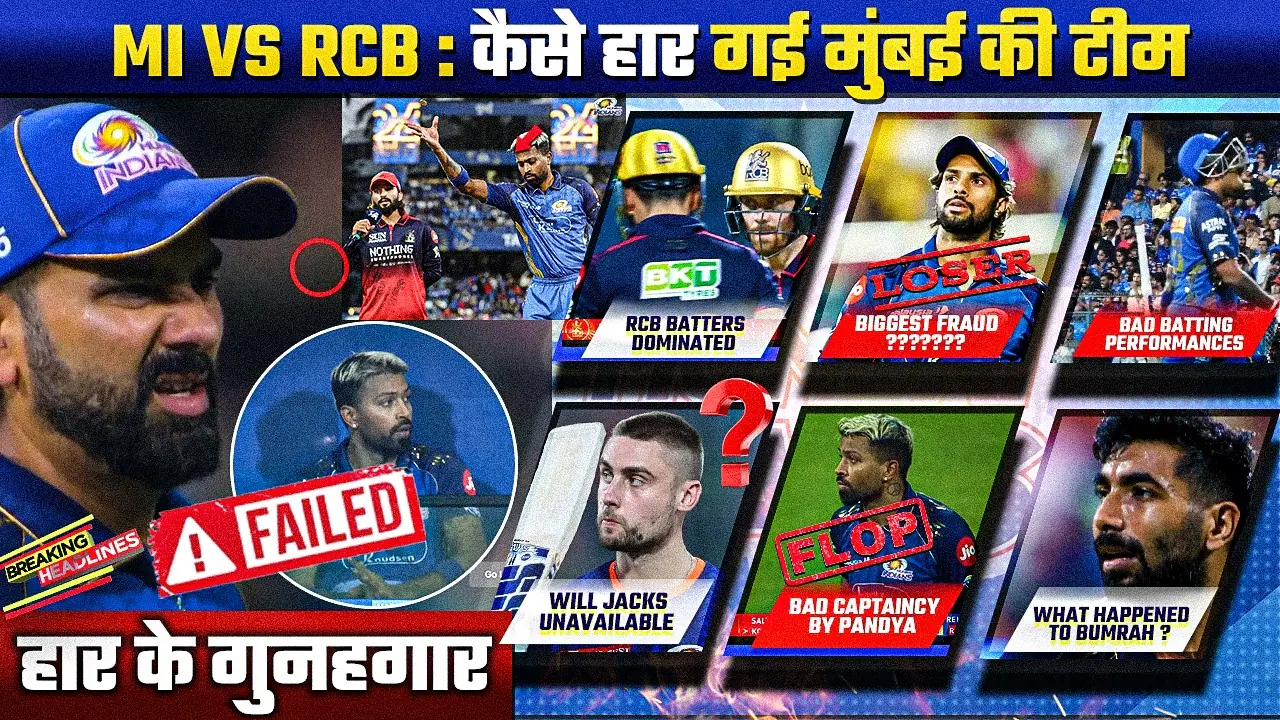
Detailed analysis of MI vs RCB 2026 match where RCB scored 240 and defeated Mumbai Indians by 18 runs. Was it poor intent, weak bowling, or outdated T20 approach?
MI vs RCB 2026 Match Summary and Key Turning Points

The match between Mumbai Indians and Royal Challengers Bangalore was a high-scoring encounter where RCB posted a massive total of 240 runs, and Mumbai Indians managed 222 runs, losing by 18 runs. On paper, this looks like a close contest, but the reality of the game tells a different story. RCB dominated major phases of the match, especially during the powerplay and middle overs, where their aggressive intent set the tone. Mumbai did show some resistance in the death overs, mainly through a late surge, but by then the required run rate had already gone out of control. The key turning point was RCB’s explosive batting between overs 5 to 14, where they scored at an extraordinary pace, putting MI under constant pressure.
Mumbai Indians: Lack of Intent and Execution Issues
Mumbai Indians did not look like a team fully committed to chasing a 240+ target. Apart from a few individual performances, the overall batting approach lacked urgency. In modern T20 cricket, chasing such a target requires aggressive intent from the very beginning, but MI batters played too many dot balls and relied heavily on singles and doubles during crucial overs. This approach increased pressure instead of reducing it.
The bowling unit also underperformed significantly. Despite having experienced bowlers, they failed to pick wickets at regular intervals. In T20 cricket, wicket-taking is as important as controlling runs, and MI lacked both in this match. Their bowlers were unable to disrupt RCB’s rhythm, which allowed the opposition to build momentum continuously.
Another major concern is team selection and strategy. Some key players were either underutilized or not used effectively in match situations. This reflects a lack of clarity in leadership and tactical execution.
RCB’s Modern T20 Approach vs MI’s Outdated Style
RCB’s performance highlighted a clear difference in approach between the two teams. Their batting was fearless, aggressive, and aligned with modern T20 standards. Players attacked from ball one, maintained a high strike rate, and capitalized on every scoring opportunity. This is the kind of intent required in today’s game.
On the other hand, Mumbai Indians seemed stuck in a slightly outdated style of T20 cricket, where consolidation phases were given more importance than aggressive acceleration. In a 240-run chase, such an approach is ineffective. The contrast was evident: RCB kept pushing the game forward, while MI often looked like they were trying to stabilize instead of dominate.
Ultimately, the difference was not just skill but mindset. RCB played to win aggressively, while MI appeared reactive for most of the game.
Final Verdict
Mumbai Indians did not lose because they lacked talent; they lost because they lacked intent, clarity, and execution. The team looked strong on paper but failed to translate that strength onto the field. RCB, on the other hand, showcased how modern T20 cricket should be played—with aggression, confidence, and strategic clarity.
If Mumbai Indians want to compete at the highest level this season, they need immediate changes in mindset, team strategy, and on-field execution. Otherwise, such close defeats will continue to expose deeper issues within the team.
MI vs RCB 2026, Mumbai Indians analysis, RCB batting performance, IPL 2026 match review, MI poor bowling, T20 intent cricket, Rajat Patidar innings , Phil Salt, Virat Kohli, Rohit Sharma, Hardik Pandya