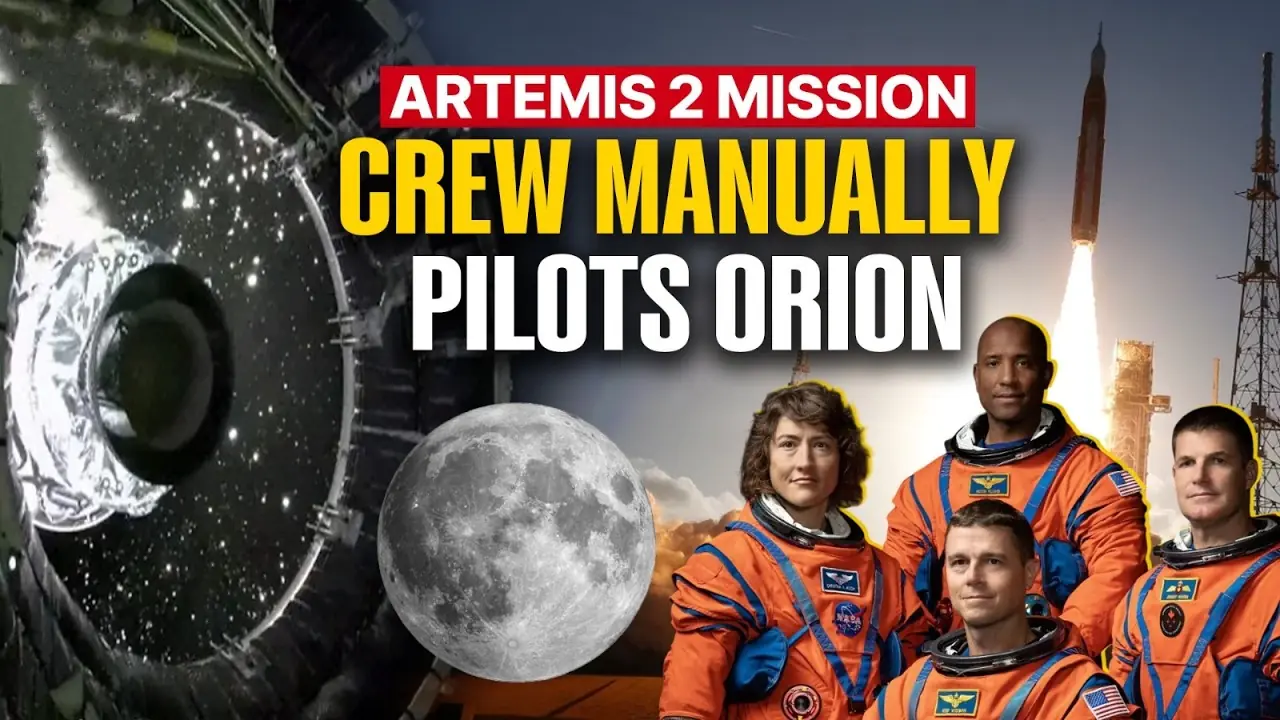
Experience the thrilling Artemis 2 launch as NASA sends astronauts toward the Moon. Full mission breakdown, key milestones, and what this means for the future of space exploration.
Artemis 2 Launch: A Historic Journey Back to the Moon
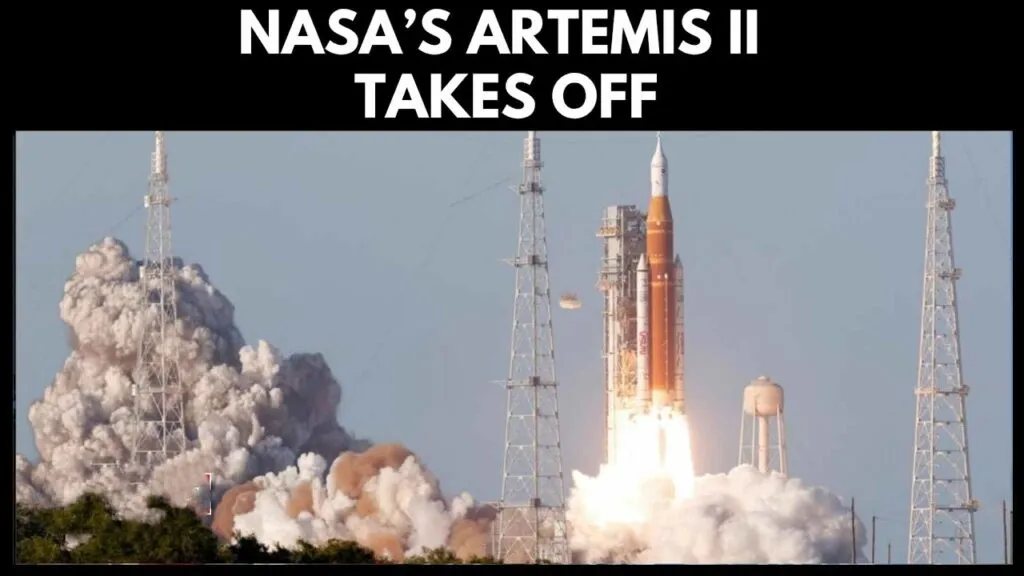
The countdown reached zero, engines roared to life, and within seconds, humanity once again began its journey toward the Moon. The Artemis 2 mission marks a defining moment in modern space exploration, signaling not just a return to lunar orbit but the beginning of a new era of human spaceflight.
Liftoff: Power and Precision
At ignition, the RS-25 engines fired flawlessly, followed by solid rocket booster ignition. The spacecraft, named Integrity, lifted off with immense thrust, cutting through Earth’s atmosphere with precision. Within seconds, the vehicle achieved stable roll and pitch maneuvers, confirming a perfect trajectory.
Mission control quickly took charge, reporting strong engine coordination and nominal performance. The spacecraft rapidly gained altitude and velocity, crossing critical early milestones without deviation.
Supersonic Flight and Max Q
Within the first minute, Artemis 2 crossed into supersonic speeds. The vehicle approached Max Q—the point of maximum aerodynamic pressure—one of the most structurally demanding phases of the mission.
Engine throttle adjustments ensured stability, reducing stress on the rocket while maintaining acceleration. This phase is crucial, as any anomaly here could jeopardize the mission. However, all systems performed within expected parameters.
Booster Separation and Mid-Flight Milestones
At approximately two minutes into flight, the solid rocket boosters separated as planned. This marked a significant reduction in mass, allowing the core stage engines to take full control of propulsion.
By the three-minute mark, the spacecraft had already reached near-space altitudes. Key events followed in rapid succession:
- Fairing separation
- Launch abort system jettison
- Transition to internal guidance systems
Each milestone was executed with precision, confirming the spacecraft’s readiness for deep-space travel.
Crossing the Kármán Line: Entering Space
Around 3 minutes and 50 seconds into the mission, Artemis 2 officially crossed the Kármán line, the recognized boundary of space. The crew—Wiseman, Glover, Koch, and Hansen—successfully entered microgravity conditions.
Communication checks remained stable, GPS signals were acquired, and onboard systems transitioned to autonomous navigation. This phase confirmed that both crew and spacecraft were fully operational in space.
Main Engine Cutoff and Orbital Trajectory
As the mission approached the eight-minute mark, the core stage engines began throttling down in preparation for MECO (Main Engine Cutoff). At precisely 8 minutes and 2 seconds, the engines shut down as planned.
Moments later:
- Core stage separation was confirmed
- Spacecraft achieved the correct trajectory
- Systems transitioned to orbital operations
With this, Artemis 2 successfully completed its launch phase and began its journey toward the Moon.
Why Artemis 2 Matters
Artemis 2 is more than just another space mission—it represents humanity’s return to deep space after decades. Unlike previous missions, this one carries astronauts who will travel around the Moon, testing systems critical for future lunar landings.
Key objectives include:
- Validating life-support systems
- Testing deep-space navigation
- Preparing for Artemis 3 lunar landing
Final Thoughts
The Artemis 2 launch was a flawless demonstration of engineering, coordination, and human ambition. Every milestone—from liftoff to orbital insertion—was executed with near-perfect accuracy.
As the spacecraft continues its journey, one thing is clear: humanity is no longer just revisiting the Moon—we are preparing to stay, explore, and go even further.
The next chapter of space exploration has officially begun.
Artemis 2 launch, NASA moon mission, Space Launch System, Artemis program, human spaceflight, moon mission 2026