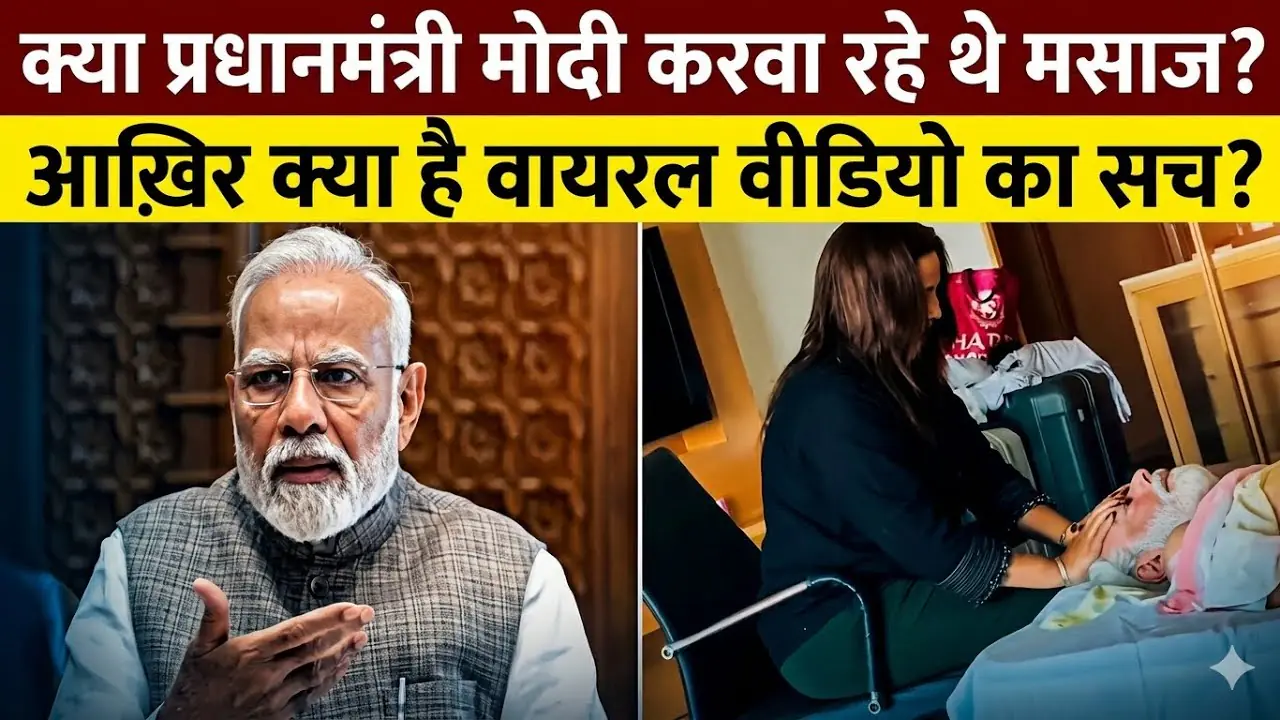
Modi Massage Video: A viral video falsely linked to India’s Prime Minister highlights the dangers of misinformation on social media. Learn how fact-checking revealed the truth and why verification matters.
The Viral Modi Massage Video That Sparked Controversy
In today’s digital ecosystem, social media has evolved into a powerful amplifier of information—capable of shaping narratives within minutes. Recently, a seemingly ordinary video showing a woman giving a facial massage to a man went viral across platforms. What started as a casual clip quickly escalated into a political controversy when users began speculating that the man resembled India’s Prime Minister. Without any verified evidence, the video was widely circulated with misleading captions, Arguments, and even insinuations. Influencers and public figures added fuel to the fire by engaging with the post, which further accelerated its reach. This incident clearly demonstrates how rapidly misinformation can spread when users prioritize engagement over authenticity.
Fact Check Reveals the Truth Behind the Clip
As the video gained traction, fact-checkers initiated a verification process to determine its authenticity. Using tools like Google Reverse Image Search, investigators traced the origin of the video. The findings revealed that the clip had no connection to any political figure. Instead, it was part of a personal travel vlog titled “Amritsar to Chandigarh Travel Diary,” originally uploaded by a social media user. The video simply depicted a private moment involving acquaintances, with no political or public significance. While the video itself was genuine, its context had been completely distorted. This is a classic example of “contextual misinformation,” where real content is misrepresented to create a false narrative.
Why Fact-Checking is Critical in the Digital Age
This case underscores a crucial lesson: not everything that goes viral is true. In the age of AI-generated content and rapid information exchange, verifying the source, context, and authenticity of any media is essential. A single misleading post can damage reputations, influence public opinion, and even trigger political tensions. Users must adopt a more analytical approach before sharing content—checking the origin, cross-referencing with credible news outlets, and avoiding impulsive reactions. Social media platforms empower individuals, but with that power comes responsibility. Ensuring accuracy before amplification is no longer optional; it is a necessity for maintaining digital integrity.
social media misinformation, viral video fact check, fake news India, AI generated video truth, verify viral content, Narendra Modi Video, Modi Massage video